
The First 10 Minutes Decide Everything
What Actually Happens in the Earliest Moments of an Incident
By Mark Wood, CEO | Lt., Indianapolis Metropolitan Police Department (ret.)
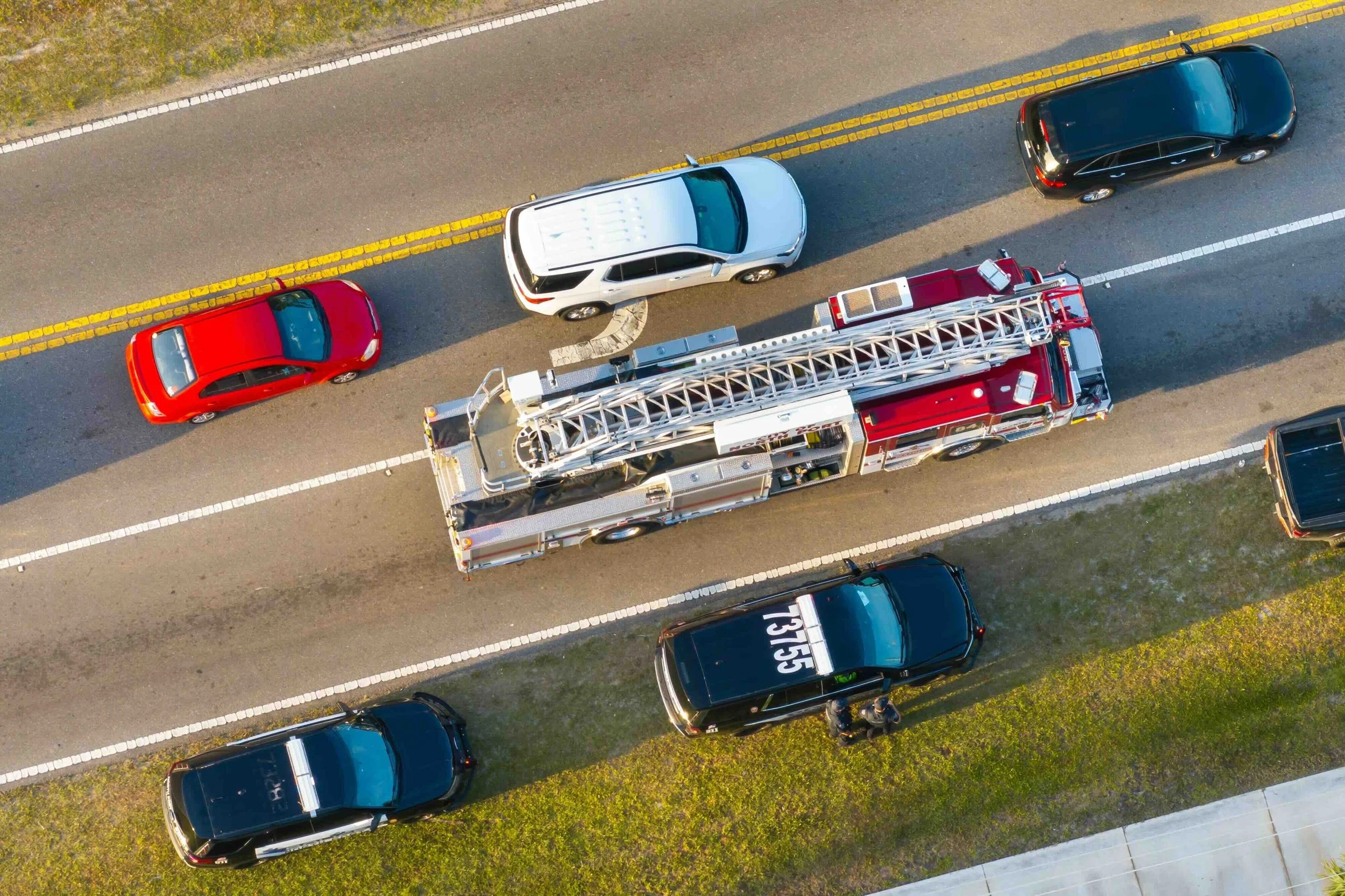
Over the course of my law enforcement career, I responded to hundreds of incidents ranging from routine calls to major critical events.
Looking back, I've come to a realization:
The biggest challenge in the first 10 minutes is rarely communication. It's alignment.
Most people assume incidents become chaotic because teams aren't talking to each other. In reality, the opposite is usually true. Everyone is talking.
Dispatchers are relaying information. Officers are calling out updates. Supervisors are requesting resources. Fire and EMS are sharing what they're seeing. Information is moving constantly.
The problem is that information alone doesn't create a common operating picture. In those first critical minutes, different people often develop different understandings of the same incident.
An officer approaching from the south may believe the suspect is still on scene. Another arriving from the north may have information suggesting they've fled. Dispatch may be working from information provided several minutes earlier. A supervisor may be making deployment decisions based on yet another version of events.
Everyone is communicating. But not everyone is operating from the same understanding. That distinction matters.
Because the first 10 minutes of an incident are when the most important decisions are often made:
Where resources are deployed.
How risks are assessed.
Whether additional agencies are requested.
How command begins to take shape.
When teams are aligned early, those decisions happen faster and with greater confidence. Resources are positioned more effectively. Risks are identified sooner. Command structures develop naturally.
When teams are not aligned, even experienced responders can find themselves working from different assumptions. Valuable time is spent reconciling information instead of acting on it.
I've seen incidents where dozens of highly capable professionals were all working hard, yet still struggling to gain traction because everyone had a slightly different picture of what was happening.
The issue wasn't effort. The issue wasn't communication. The issue was that nobody had a shared understanding quickly enough.
And as incidents become larger and more complex, that challenge only grows.
Today's public safety responses routinely cross jurisdictions and disciplines. Law enforcement, fire, EMS, emergency management, schools, hospitals, and private-sector partners may all become involved in the same event.
Each organization brings valuable information. Each organization also brings another perspective that must be aligned with everyone else's.
The result is that the challenge facing public safety agencies today isn't simply sharing information.
It's transforming information into shared understanding. That is the foundation of effective unified command.
The agencies that consistently perform well during critical incidents aren't necessarily the ones with the most data. They're the ones that create alignment fastest.
Because once teams share the same understanding of what's happening, coordination becomes easier, decisions become clearer, and the response moves with purpose.
That's why I believe the first 10 minutes matter so much. Not because they determine everything that follows. But because they determine how quickly a collection of responders becomes a coordinated team.
And in public safety, that transition—from communication to alignment—is often what separates a good response from a great one.
If your agency is thinking about how to improve coordination during those first critical minutes, it’s a conversation worth having. We’re always interested in hearing how agencies are approaching alignment across teams, disciplines, and jurisdictions.
