
Why cross-jurisdiction communication still breaks down, and how agencies can talk from the first minute
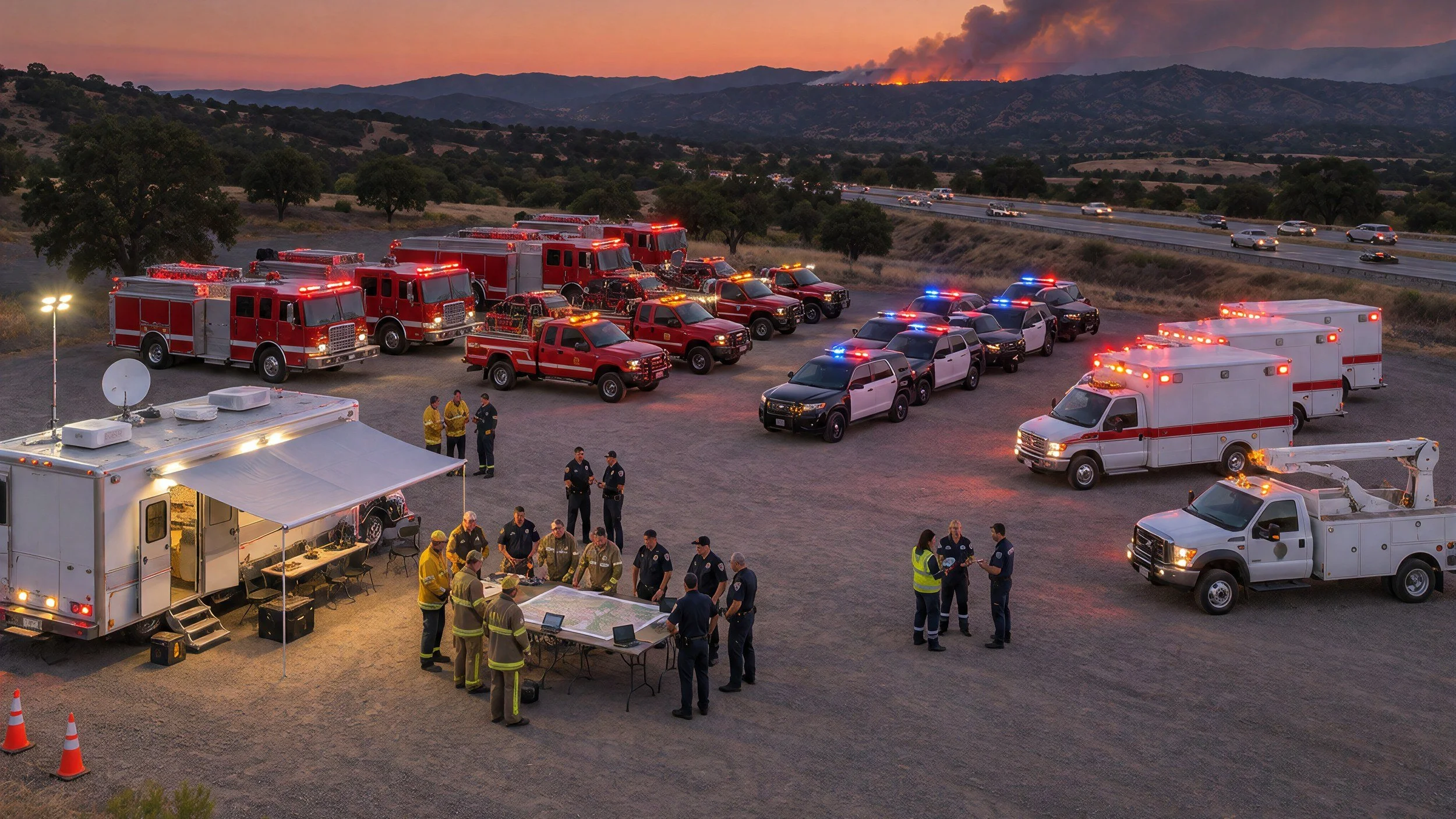
In September, Texas lawmakers held another hearing on how the state responds to disasters. The head of the Texas Division of Emergency Management told them it can take 36 hours before every responding agency is working from the same communications plan.
Thirty-six hours. In a disaster, that is most of the window that matters.
Texas isn't unusual. It just put a number on a problem every region has. Responders across the state operate on more than 50 independent radio systems, mostly locally owned and built for local needs. During the July 2025 Hill Country floods, patching those systems together was too slow to keep up with the response.
How can agencies communicate during mutual aid without shared radios?
The short answer: put a shared communications layer on the devices responders already carry. Push-to-talk, paging, and messaging over cellular and Wi-Fi let any responding agency join the same channels on arrival, without reprogramming radios or sharing frequencies. Radios stay the backbone. The shared layer connects everyone the radio can't.
Why radio interoperability takes so long
Each agency built its radio system for its own jurisdiction, terrain and budget. That works every day, inside an agency's boundaries.
The trouble starts at the boundary line. When mutual aid arrives, someone has to patch systems together, hand out radios, assign talk groups, and get every agency onto one plan. That takes people, equipment, and time. Meanwhile, responders fall back on cell phone calls and runners.
States are working on it. Texas has proposed an interoperability council with grants for radios and towers. That's the right long-term investment. But towers take years and the next incident won't wait.
What responders need in the first hour
The gap isn't about technology for its own sake. It's about a few simple things that need to happen fast:
Every arriving unit knows which channel to join
Command can reach everyone on scene, from every agency
Teams get their own channels as the incident grows, without losing touch with command
Messages, locations with directions, and files are shared, not repeated over and over
Everything said and shared is on the record afterward
None of that should depend on whether two agencies bought the same radios.
How LeoSight helps
LeoSight's LeoLink solution lets agencies create a multi-agency communications network on the fly. Responding teams join shared channels as the incident evolves. Push-to-talk, paging, chat, location pin drop, and file sharing connect responders across jurisdictional lines on the phones they already carry.
Command staff bring mutual aid personnel into the conversation with access tailored to their role. Your partners join free, so they don't have to be LeoSight customers to respond with you. Voice memos are transcribed and kept in the channel, with a chain of custody for the record.
No new radios. No per-seat licenses. No waiting on IT.
The goal is simple: communication organized around the response, not agency boundaries.
Frequently asked questions
Does a shared communications platform replace radios?
No. Radios remain critical, especially where cellular coverage is weak. A shared platform adds a layer that connects agencies whose radio systems don't talk to each other.
How quickly can a mutual aid partner join?
Bring your partners into the communication network in seconds with a simple QR code scan.
Do partner agencies need to buy licenses?
No. Mutual aid partners, task forces, and volunteers join free as Support Users.
Is it secure enough for law enforcement?
Yes, LeoLink is CJIS-compliant.
The next incident won't wait for radio communications systems to catch up
Thirty-six hours is a long time to wait for everyone to be on the same page. Radio investments will close that gap over years, however, LeoSight's shared communications layer can close it today.
